Guides · Wardrobes
There’s no universally better answer — only a better answer for your room, your budget and how you actually get dressed.
The walk-in vs sliding wardrobe question comes up in almost every consultation, and there’s no universally “better” answer — only a better answer for your room, your budget and how you actually get dressed in the morning.
A walk-in wardrobe needs a genuinely separate floor area — enough to open, stand inside comfortably, and ideally walk a full circle around a central island. If your bedroom can spare that footprint, a walk-in delivers a dressing-room experience that a built-in wardrobe simply can’t. If the room can’t spare that space without shrinking the bed area uncomfortably, a sliding or hinged wardrobe along one wall is almost always the better choice.
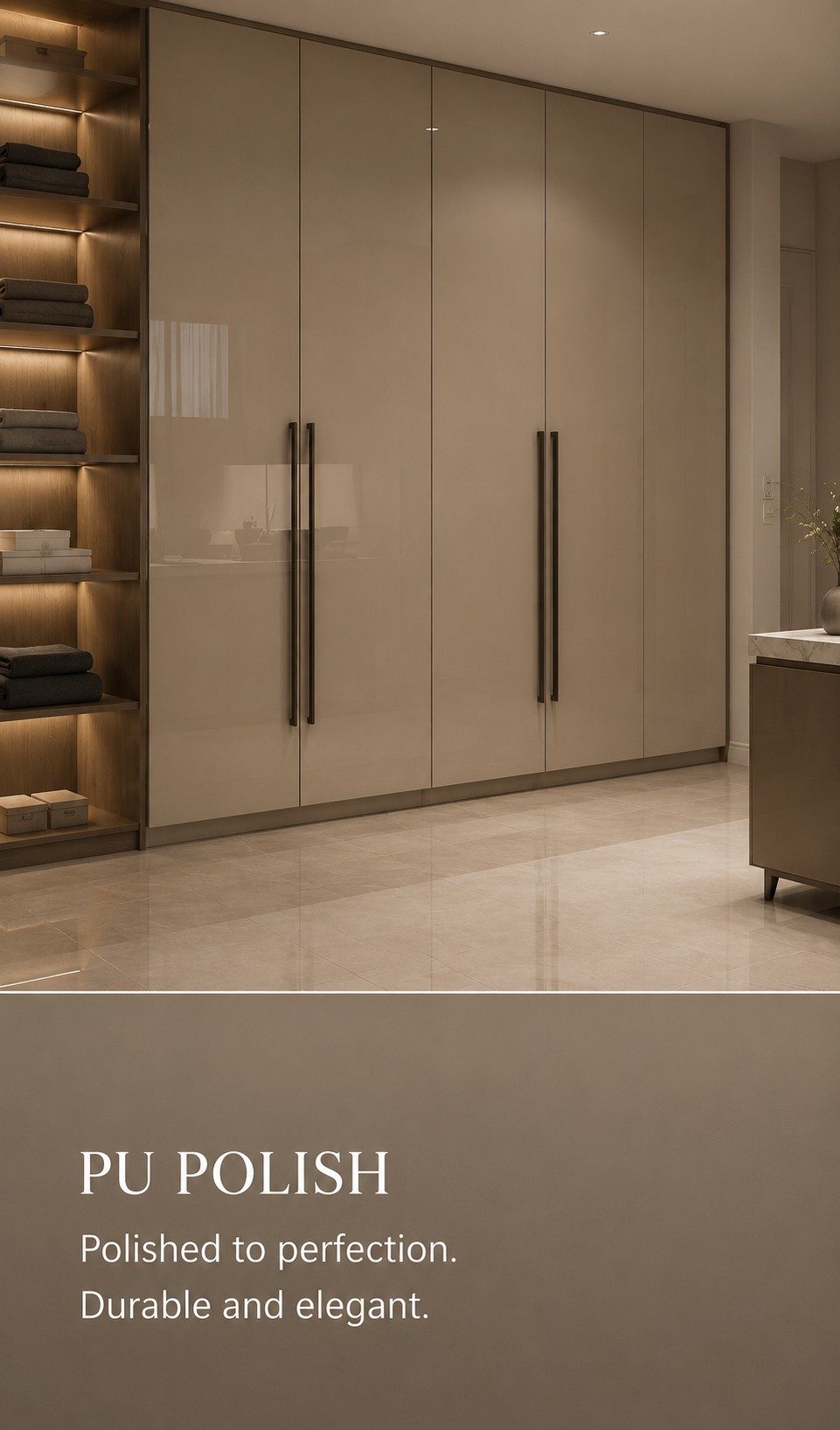
Sliding wardrobe doors never swing into the room, which makes them the standard choice for bedrooms where floor space is tight. The trade-off is that only one section is accessible at a time — you can’t open the full wardrobe width at once the way you can with hinged doors. Modern sliding systems with soft-close tracks and two-tone finishes have mostly closed the aesthetic gap with hinged and walk-in systems.
Hinged wardrobes need swing clearance in front of each door, but in exchange give full-width access to every shelf and hanging rail simultaneously — useful if you’re often getting dressed quickly and want to see everything at once. They work well in slightly more generous rooms that still can’t accommodate a true walk-in.
Beyond floor area, a walk-in wardrobe benefits from dedicated lighting (ideally on a separate circuit or with motion sensors), ventilation to prevent musty odours in humid climates, and a clear plan for how garments, shoes and accessories will be zoned before the layout is finalised. A walk-in designed without this planning ends up feeling like a slightly larger version of a sliding wardrobe rather than a genuine dressing room.
Walk-in wardrobes generally cost more than sliding or hinged systems of equivalent storage capacity, since they involve more cabinetry surface area, often a central island, and dedicated lighting. If budget is the primary constraint, a well-organised sliding wardrobe with good internal accessories — trouser pull-outs, jewellery organisers, soft-close drawers — can deliver most of the functional benefit of a walk-in at a lower cost.
Measure the room honestly before deciding on style. If a walk-in would compromise the rest of the bedroom’s proportions, a well-planned sliding wardrobe with thoughtful internal organisation will serve you better than an undersized walk-in. See the full range of wardrobe systems and finishes we design, or book a consultation and we’ll help you decide based on your actual room measurements.
Book a private consultation for your wardrobe — from walk-in layouts and internal organisers to hardware, finishes and factory-precise installation.
Book ConsultationStudio: S-10, Upper Floor, New Plywood Glass Agency, Shree Gopal Nagar, Gopalpura Bypass, Jaipur 302018
Works: Royal Crafts & Creation Pvt. Ltd., H-172, Sitapura Industrial Area, Jaipur 302022
+91 97720 73273
+91 9414068383
sales@aanandamhom.com
@aanandamhom